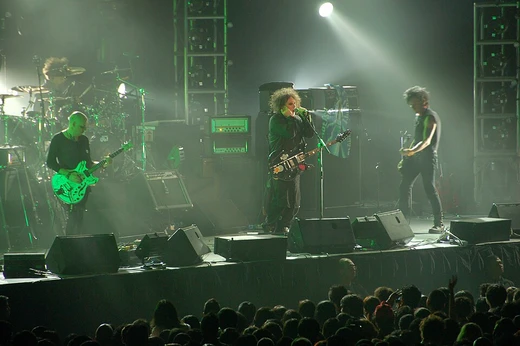
Boris Williams
The drummer who learned with knitting needles and held the beat for The Cure from 1984 to 1994.

via Wikipedia: Boris Williams · see source
Boris Peter Bransby Williams (born 24 April 1951) is an English musician, best known as the drummer for The Cure from 1984 until 1994. He learned drums with his mother's knitting needles and never had formal instruction. Williams first played drums in local bands with future Cure bandmate Roger O'Donnell and originally focused on jazz fusion. He then turned to alternative rock and served as a session and touring musician for Thompson Twins and Kim Wilde. In 1984, The Cure needed a new drummer in the middle of an American tour when Andy Anderson was suddenly fired. Williams was recommended by the Cure's then-bassist/producer Phil Thornalley, who had worked with him while engineering the Thompson Twins album *Quick Step & Side Kick*. Williams learned the Cure's set list in three days, and his first performance with the band was in November 1984. He was then invited to be the band's permanent drummer, and his first album as a full-time member was *The Head on the Door* in 1985.
- Role
- Drummer
- Tenure Start
- 1984
- Key Era
- Gothic Rock to Alternative Pop
- Notable Contribution
- Rhythmic Foundation for *The Head on the Door* through *Wish*
Verified Timeline
Lore & Background
Boris Williams was born in 1951 (some sources mistakenly say 1957) in Versailles, France to English parents, and his family moved to Farnham, England during his childhood. He learned drums with his mother's knitting needles and never had formal instruction. He first played drums in local bands with future Cure bandmate Roger O'Donnell and originally focused on jazz fusion. He then turned to alternative rock and served as a session and touring musician for Thompson Twins and Kim Wilde. In 1984, The Cure needed a new drummer in the middle of an American tour when previous drummer Andy Anderson was suddenly fired. Williams was recommended for the position by the Cure's then-bassist/producer Phil Thornalley, who had worked with Williams while engineering the Thompson Twins album *Quick Step & Side Kick*. Williams learned the Cure's set list in three days, and his first performance with the band was in November 1984. He was then invited to be the band's permanent drummer, and his first album as a full-time member was *The Head on the Door* in 1985. Williams was present during the Cure's most successful period and is often cited by fans as the best drummer in the band's history. Known for experimenting with electronic percussion and loops, Williams was a primary contributor to the band's remix album *Mixed Up* in 1990. He was also known for his innovative drumming style, with Freaky Trigger saying: "[He] is a god among drummers due to his complete willingness to create an entire beat based on doing rolls on the various toms in his kit." Williams has been cited by Billboard for his subtle but forceful drumming, "improbably stealing the show from his bandmates"; and critics often praise his technical and timekeeping skills. Williams is also credited with contributions to albums by Shelleyan Orphan, featuring his longtime partner Caroline Crawley. He left the Cure for personal reasons in 1994. Later in that decade, he formed the band Babacar with Crawley and various other associates of The Cure; his former Cure bandmate Porl Thompson made occasional contributions to the band. Babacar released a self-titled album in 1998. Williams contributed to new acoustic versions of Cure songs that were recorded for their *Greatest Hits* compilation in 2001, though he did not officially rejoin the band. In 2019, he was inducted into the Rock and Roll Hall of Fame as a member of the Cure.
In Their Own Story
In 1984, The Cure needed a new drummer in the middle of an American tour, when previous drummer Andy Anderson was suddenly fired. Williams was recommended for the position by the Cure's then-bassist/producer Phil Thornalley, who had worked with Williams while engineering the Thompson Twins album *Quick Step & Side Kick*. Williams learned the Cure's set list in three days, and his first performance with the band was in November 1984. He was then invited to be the band's permanent drummer, and his first album as a full-time member was *The Head on the Door* in 1985. Known for experimenting with electronic percussion and loops, Williams was a primary contributor to the band's remix album *Mixed Up* in 1990. Freaky Trigger said: "[He] is a god among drummers due to his complete willingness to create an entire beat based on doing rolls on the various toms in his kit." Billboard cited him for his subtle but forceful drumming, "improbably stealing the show from his bandmates." He left the Cure for personal reasons in 1994. Later in that decade, he formed the band Babacar with his longtime partner Caroline Crawley and various other associates of The Cure; his former Cure bandmate Porl Thompson made occasional contributions. Babacar released a self-titled album in 1998. Williams contributed to new acoustic versions of Cure songs that were recorded for their *Greatest Hits* compilation in 2001, though he did not officially rejoin the band. In 2019, he was inducted into the Rock and Roll Hall of Fame as a member of the Cure.
Reader's Guide
Boris Williams is best known as the drummer for The Cure from 1984 until 1994. His first album as a full-time member was *The Head on the Door* (1985). He also played on *Kiss Me, Kiss Me, Kiss Me* (1987), *Disintegration* (1989), *Mixed Up* (1990), *Entreat* (1991), *Wish* (1992), *Paris* (1993), and *Show* (1993). He contributed to the *Greatest Hits* compilation (2001) with new acoustic versions of Cure songs. Before The Cure, he played on Thompson Twins' *Quick Step & Side Kick* (1983), Strawberry Switchblade's self-titled album (1985), Robbie Nevil's self-titled album (1986), and Ian McCulloch's *Candleland* (1989). He also played on Shelleyan Orphan's *Humroot* (1992) and *We Have Everything We Need* (2008). After leaving The Cure, he formed Babacar, which released a self-titled album in 1998. Williams learned drums with his mother's knitting needles and never had formal instruction. He first played drums in local bands with future Cure bandmate Roger O'Donnell and originally focused on jazz fusion. He then turned to alternative rock and served as a session and touring musician for Thompson Twins and Kim Wilde.
Did You Know?
- Boris Williams learned drums with his mother's knitting needles and never had formal instruction.
- He was born in Versailles, France to English parents, not in England.
- He learned The Cure's entire set list in just three days before his first performance with the band in November 1984.
- Freaky Trigger called him 'a god among drummers' for his willingness to create entire beats based on rolls on various toms.
- He was inducted into the Rock and Roll Hall of Fame in 2019 as a member of The Cure.
More in Band Members & Collaborators
Elsewhere in the The Cure universe
Spotted an error? Know more?
This is a living reference — every entry is fact-audited, and reader corrections feed straight into our audit queue. Suggest an edit · See this site's audit record