The Wish Tour
A triumphant, sprawling celebration of The Cure's peak era.

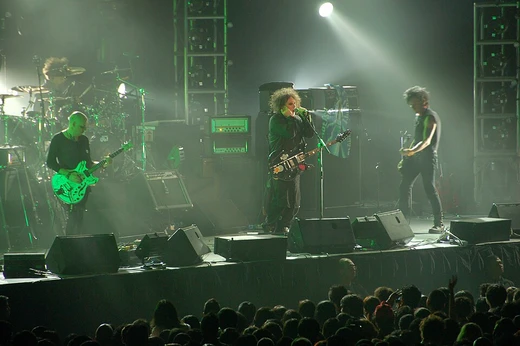
The Wish Tour was the live concert series supporting The Cure's ninth studio album, *Wish*, released in 1992. It marked a high point in the band's commercial success, with the album reaching number one in the UK and number two in the US. The tour spanned multiple continents and featured a mix of intimate venues and large festivals, showcasing the band's evolving sound that blended pop accessibility with their signature dark, atmospheric rock.
- Tour name
- The Wish Tour
- Associated album
- Wish
- Band members
- Robert Smith, Simon Gallup, Porl Thompson, Boris Williams, Perry Bamonte
- First show
- 1992
- Last show
- 1992
- Legs
- Multiple (Europe, North America, South America, Japan)
Lore & Background
The Wish Tour arrived at a moment when The Cure had fully ascended to global stardom, yet Robert Smith's songwriting remained deeply personal and melancholic. The setlists drew heavily from *Wish*, including anthems like 'Friday I'm in Love' and 'High,' but also revived older cult favorites such as 'A Night Like This' and 'The Figurehead,' creating a bridge between the band's gothic roots and their more accessible new material. The tour's production was notably elaborate, with dramatic lighting and a stage design that reflected the album's dreamlike, childlike imagery, including oversized floral props and swirling projections. Fans recall the tour as a time of intense emotional connection, with Smith's vulnerable stage presence and the band's tight musicianship delivering performances that could shift from euphoric pop to crushing despair within a single song. The South American leg, in particular, was legendary for the fervent crowds, and the band's decision to play smaller venues in some cities fostered an intimacy that contrasted with the stadium shows elsewhere. The tour also saw the debut of Perry Bamonte as a full-time member, replacing Roger O'Donnell (who had been the band's dedicated keyboardist from 1987 to 1990), and his contributions on keyboards and guitar helped shape the live sound.
In Their Own Story
The rain fell in sheets over the outdoor amphitheater, but the crowd didn't move. They stood, soaked and shivering, as the first chords of 'Open' rang out. Robert Smith's voice cut through the downpour, raw and unguarded. He clutched the microphone stand, his smeared lipstick running in the wet, and sang as if the storm were part of the song. When 'From the Edge of the Deep Green Sea' began, the audience roared, a collective howl against the night. For a moment, the rain seemed to stop, held back by the sheer force of the music. Then the band crashed into 'End,' and the storm returned, but no one cared. They were already lost.
Reader's Guide
The Wish Tour kicked off in Europe in spring 1992, with early shows at smaller venues like the Town and Country Club in London before moving to larger arenas. The setlist evolved significantly over the tour: early dates featured deep cuts like 'The Drowning Man' and 'The Holy Hour,' while later shows leaned heavily on *Wish* and hits from *Disintegration* and *Kiss Me, Kiss Me, Kiss Me*. The North American leg saw the band playing iconic venues like Madison Square Garden and the Hollywood Bowl, often with extended encores that stretched past midnight. A notable controversy arose when the band canceled several dates due to Robert Smith's vocal strain, leaving fans in cities like Detroit and Seattle fuming—though Smith later made amends with intimate acoustic performances at local record stores. The South American leg was a highlight, with massive crowds in Buenos Aires and São Paulo turning into euphoric, tear-soaked singalongs that nearly drowned out the band.
Did You Know?
- The tour's stage design included giant inflatable flowers and a backdrop inspired by the *Wish* album cover art, creating a surreal, dreamlike atmosphere.
- Robert Smith often changed the setlist on the fly, sometimes writing it on a piece of paper just before the show, leading to rare and unexpected song choices.
- The band's performance at the 1992 Reading Festival was widely bootlegged and is considered one of the best live recordings of the era.
- Perry Bamonte's addition to the lineup during this tour marked the first time The Cure had a dedicated keyboardist on stage since the early 1980s.
More in Tours & Live Performances
Elsewhere in the The Cure universe
Spotted an error? Know more?
This is a living reference — every entry is fact-audited, and reader corrections feed straight into our audit queue. Suggest an edit · See this site's audit record