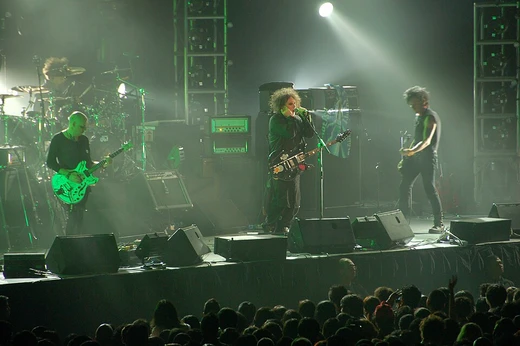
Kiss Me, Kiss Me, Kiss Me Tour
A whirlwind of neon lights and dance beats that redefined the band's global stage presence.

The Kiss Me, Kiss Me, Kiss Me Tour stands as a pivotal chapter in The Cure's history, marking their transition from post-punk melancholy into a vibrant, dance-oriented pop era. Launched to support the band's seventh studio album of the same name, this worldwide excursion showcased a new sonic identity characterized by upbeat rhythms and infectious melodies that surprised many long-time followers while captivating a broader global audience. It represented a bold reinvention for Robert Smith and his bandmates, proving their versatility beyond the gothic shadows they were famous for.
- Era
- Late 1980s
Lore & Background
Fans recall this period as a time of duality; while the music was undeniably cheerful, the underlying themes often retained a sense of longing and irony typical of the group's songwriting. The tour became a bridge between their gothic past and a more mainstream future, creating a unique space where melancholy could dance alongside joy. It solidified their status not just as cult figures, but as genuine pop icons capable of filling massive arenas with infectious energy.
In Their Own Story
The stage lights cut through the haze, painting the crowd in electric blues and magentas. Robert Smith stepped forward, his hair a wild black silhouette against the bright backdrop, ready to ignite the room. As the opening synth chords rang out, a collective gasp turned into a roar; the audience knew this wasn't just another show. The rhythm hit hard, shaking the floorboards, as thousands of hands reached up toward the neon glow, united in a moment where sadness and euphoria danced hand in hand under the stadium lights.
Reader's Guide
This extensive trek took the band across North America, Europe, Japan, and Australia, playing to increasingly larger venues that reflected their surging popularity. The setlist evolved significantly from previous tours, heavily featuring upbeat tracks like 'The Caterpillar' and 'Lovesong', which became instant anthems in a live setting. Memorable moments included the band's playful interaction with the crowd during high-energy numbers, often breaking the fourth wall with humor that contrasted their usual stoic image. The visual production was notably bright, utilizing colorful lighting rigs that replaced the dark, shadowy aesthetics of earlier years. While some purists initially struggled with the pop direction, the tour's success in selling out major arenas proved the band's adaptability. Controversies were minimal compared to the sheer joy the performances generated, cementing this era as a beloved highlight for fans who appreciate the band's dynamic range.
Did You Know?
- The tour helped propel 'Just Like Heaven' into becoming one of the band's most enduring and recognizable hits globally.
- Robert Smith often wore colorful suits during this period, a stark visual departure from his traditional all-black gothic attire.
- The Cure did not consistently headline major stadiums in North America until the 1989 'Prayer Tour'.
Creative Origins and Collaboration
Following the international momentum generated by The Head on the Door and the subsequent Standing on a Beach compilation, Robert Smith sought to generate new material through disciplined writing habits. He committed to composing for fifteen days every month, a rigorous regimen that ultimately yielded the track Just Like Heaven. This period marked a significant collaborative shift within the group; unlike previous top-down control, band members submitted cassettes of their own musical ideas during summer sessions in London. After gathering six or seven songs from each musician, the group voted to narrow down the selection during pre-production in Draguignan. This democratic approach helped shape the direction before they moved to France for full recording sessions, ensuring a diverse range of influences entered the final product. This process allowed for a broader sonic palette than previous efforts.
Recording Environment and Techniques
The bulk of production occurred at Studio Miraval in Correns, where the band prioritized spontaneity over rigid rehearsal schedules. Smith described the process as almost jamming to capture the correct feel, often finalizing tracks in just one or two takes while experimenting with Mediterranean influences. During these three months, they accumulated enough strong material to justify a double LP format for the vinyl release, though it was issued as a single disc on CD and cassette initially. The residential setting facilitated a focused environment for these creative experiments. Mixing duties were handled by Smith alongside co-producer David M. Allen and engineer Michel Dierickx across multiple locations. Sessions took place at Compass Point Studios in the Bahamas during December 1986, followed by work at ICP Recording Studios in Belgium the following January to finalize the sound.
Commercial Breakthrough and Singles
Upon its launch in May 1987 through Fiction Records and Elektra, the project propelled the group into American mainstream consciousness. It became their first record to crack the top forty of the Billboard 200 chart and eventually earned platinum certification stateside. Internationally, it mirrored this success by reaching the top ten in numerous markets. The single Just Like Heaven served as a major catalyst, becoming their first top forty hit in the United States and remaining one of their most beloved tracks overall. Four singles were issued from the record, solidifying its status as a commercial peak for the band during that era. This commercial breakthrough was a significant milestone for their career trajectory in North America. Notably, the original CD release omitted Hey You!!! due to time restrictions, though it appeared on cassette versions.
Artwork and Critical Legacy
The visual identity was crafted by Andy Vella, featuring a close-up photograph of Smith's lipstick-covered lips. A chance encounter with a speed bump in a taxi inadvertently determined the placement of the handwritten title on the plastic sleeve sheet, a layout Smith approved upon meeting Vella in Brazil. While initial reviews were mixed regarding the album's length, retrospective analysis has been far more generous, citing it as one of their finest works. In 2006, a deluxe reissue finally included the track Hey You!!! which was originally cut from CD due to time limits, alongside live recordings from the final show of the Kissing Tour at Wembley Arena. Smith had initially considered a three-disc edition but settled on two after consultation with friends and family.
Frequently Asked Questions
What was the purpose of the Kiss Me, Kiss Me, Kiss Me Tour?
This worldwide concert series was organized to support the release of the band's eighth studio record. It marked a major shift in their public image from dark post-punk to brighter new wave pop.
When did The Cure perform this tour?
Robert Smith led the band through this energetic period of global expansion during the late 1980s and early 1990s. The schedule covered a wide range of international venues across multiple continents.
What was the musical style of the live shows?
Live shows featured energetic tempos and catchy tunes designed to get the audience moving. This dance-rock approach surprised longtime followers but attracted a much broader international audience.
Which songs were featured prominently in the setlist?
The setlist heavily featured hits from the supporting album, such as the well-known single "Just Like Heaven". These songs showcased the band's versatility beyond their earlier gothic shadows.
Why is this tour considered important for the band?
This era is crucial because it demonstrated the group's ability to reinvent their sonic identity while maintaining their core appeal. The tour redefined their global stage presence with high-energy performances and bright visuals.
More in Tours & Live Performances
Elsewhere in the The Cure universe
Spotted an error? Know more?
This is a living reference — every entry is fact-audited, and reader corrections feed straight into our audit queue. Suggest an edit · See this site's audit record