Lovesong
A tender vow of love wrapped in melancholy.

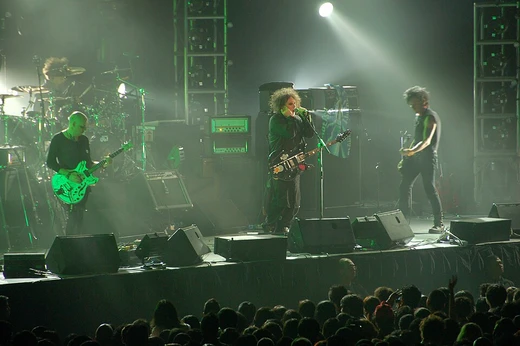
"Lovesong" is one of The Cure's most iconic and enduring tracks, a tender, melancholic love ballad that stands apart from the band's darker, more brooding catalog. Originally released in 1989 on the album "Disintegration," it was written by Robert Smith as a wedding gift for his then-fiancée, Mary Poole. The song's simple, heartfelt lyrics and lush, atmospheric arrangement have made it a fan favorite and a staple of the band's live performances, celebrated for its raw emotional honesty and timeless beauty.
- Album
- Disintegration
- Release Year
- 1989
- Songwriter
- Robert Smith
- Role
- Love ballad, wedding song
- Affiliation
- The Cure
- Status
- Fan favorite, live staple
Lore & Background
In the lore of The Cure's universe, "Lovesong" represents a rare moment of pure, unguarded affection from a band known for exploring themes of despair, isolation, and existential dread. Written by Robert Smith for his partner Mary Poole on the eve of their wedding, the song is a direct, personal declaration of love, stripped of the usual cryptic metaphors. Its lyrics, with lines like "Whenever I'm alone with you, you make me feel like I am home again," capture a sense of comfort and belonging that contrasts sharply with the album "Disintegration"'s overarching themes of loss and decay. The song's placement on "Disintegration" is deliberate, serving as a brief, luminous respite amid the album's dark, sprawling soundscapes. It is often interpreted as the emotional core of the record, a fragile hope that persists even as everything else crumbles. Fans have embraced it as a testament to Smith's ability to balance darkness with light, and it has become a beloved anthem for weddings and romantic moments, transcending the band's gothic reputation. In the wider Cure mythology, "Lovesong" is a reminder that even in a world of pain and uncertainty, love can be a grounding force. Its enduring popularity has cemented it as one of the band's most accessible and universally beloved songs, often cited by both casual listeners and die-hard fans as a defining moment in The Cure's discography.
In Their Own Story
The rain fell in sheets against the window of the small flat in Crawley, but inside, the air was warm with the scent of tea and old paper. Robert sat at the piano, his fingers hovering over the keys, the silence of the room broken only by the rhythm of the storm. He thought of Mary, of her quiet laughter and the way she held his hand in crowded rooms. The words came not as a flood, but as a whisper, a promise etched in melody. He wrote for her alone, a secret song meant to be sung in the quiet hours, a vow that would echo through decades and across stadiums, forever tying their story to the hearts of strangers.
Reader's Guide
"Lovesong" is a masterclass in simplicity and emotional depth. Lyrically, it is one of Robert Smith's most direct and vulnerable works, eschewing the elaborate imagery of songs like "A Forest" for plain, heartfelt declarations. The repetition of the phrase "However far away, I will always love you" serves as a mantra of devotion, its power growing with each iteration. Musically, the track is built on a gentle, arpeggiated guitar line and a warm, pulsating bass, with Smith's voice floating above a bed of shimmering synths and subtle strings. The production is spacious, allowing each element room to breathe, while the rhythm section locks into a slow, swaying groove that feels like a heartbeat. The song's bridge—where the bass rises and the drums intensify—creates a swell of emotion that peaks with Smith's near-desperate repetition of the title, before receding back into the gentle, resigned chorus. It's a song that doesn't demand attention; it earns it through restraint and sincerity.
Did You Know?
- Robert Smith wrote 'Lovesong' in a single night as a wedding gift for his wife Mary, and it was the only song on 'Disintegration' he wrote specifically for her.
- Despite its popularity, Smith has expressed mixed feelings about the song's commercial success, feeling it overshadows some of the album's darker tracks.
- The song was released as a single in the US and became The Cure's highest-charting hit on the Billboard Hot 100, reaching number two.
- Adele's 2011 cover of 'Lovesong' was included as a bonus track on certain editions of her album '21', introducing the song to a new generation and earning critical acclaim for its soulful interpretation.
More in Iconic Songs & B-Sides
Elsewhere in the The Cure universe
Spotted an error? Know more?
This is a living reference — every entry is fact-audited, and reader corrections feed straight into our audit queue. Suggest an edit · See this site's audit record