Lovesong
A whispered confession that shatters into a scream of devotion.

Lovesong is the emotional centrepiece of The Cure's 1989 album Disintegration, a track that distils Robert Smith's lifelong preoccupation with love, longing, and self-destruction into a single, devastating arc. Structurally, it moves from a hushed, almost whispered verse into a chorus that detonates with the repeated declaration "I love you," creating a dynamic that fans often describe as feeling like a dam breaking. It became the band's most commercially successful single and remains the song most associated with The Cure in popular culture.
Within the broader narrative of The Cure's discography, Lovesong occupies a paradoxical position: it sits on an album defined by darkness, decay, and existential dread, yet it is the record's most openly tender and affirmative statement. This tension—love persisting within a landscape of ruin—has made the song a touchstone for fans who read The Cure's catalogue as a continuous emotional journey rather than a collection of discrete records.
- Artist
- The Cure
- Album
- Disintegration
- Release year
- 1989
- Primary songwriter
- Robert Smith
- Genre
- Alternative rock / Post-punk
- UK chart peak
- #1
Lore & Background
The song's architecture is central to its lore. The verses sit in a restrained, almost conversational register—Robert Smith's vocal is close, intimate, almost fragile—while the chorus erupts into a wall of sound where the words "I love you" are hammered out with a ferocity that borders on aggression. Fans and critics have long noted that this is not a gentle love song; it is love experienced as a physical force, something that overwhelms and nearly destroys the person feeling it. The repetition in the chorus functions less as a melodic hook and more as an emotional flooding, as if the speaker cannot stop saying it, cannot contain it.
Robert Smith has spoken in interviews about the song arriving with a sense of inevitability, as though the words were already formed and he was simply transcribing them. He has described the emotional core as a kind of desperate, almost painful honesty—love spoken not in comfort but in a state of vulnerability where the speaker is fully exposed. This aligns with The Cure's broader thematic project: their music has consistently framed emotional truth as something that costs the person who feels it, something that leaves scars.
The song's placement on Disintegration deepens its symbolic weight. The album's other tracks deal with isolation, self-loathing, and the collapse of identity, yet Lovesong insists, within that darkness, that love is still possible and still worth the risk of uttering. For fans who follow The Cure's arc from the angular post-punk of early records to the gothic melancholy of the mid-1980s, Lovesong reads as a moment of hard-won clarity: the speaker has been through the dark material and is choosing, despite everything, to say the words plainly.
In Their Own Story
The studio was cold that night. The other tracks on the album had bled into each other—guitars tuned low, drums like a slow heartbeat under snow. Robert sat at the piano, or maybe it was just his hands hovering over the keys, not playing yet. He'd been trying to write something that wasn't about the void, wasn't another elegy for a version of himself he'd already buried. The words came in a rush, almost embarrassing in their plainness. He sang them once, quietly, to no one, and the room felt different after. Not warmer, exactly. More honest. He looked up at the band and said, basically, "I think that's the one." They didn't argue. They just built the storm around the quiet centre and let it break open every time the chorus hit. The tape rolled. The words stayed.
Reader's Guide
The white suit. In the Lovesong music video, Robert Smith appears in a stark white suit against a dark, almost funereal backdrop. This is a deliberate inversion of The Cure's visual identity—black hair, dark clothing, shadow. The white reads as vulnerability made visible, as though the speaker has stripped away every layer of gothic armour to stand exposed. Fans often interpret it as the moment the character stops hiding behind irony and says the words plainly. Smith has acknowledged the visual was meant to signal a shift in emotional register, though he has also noted he enjoys the absurdity of the image itself.
The dynamic rupture. The quiet-to-loud structure is the song's core symbol. In The Cure's broader catalogue, this pattern appears in various forms, but Lovesong pushes it to its most extreme: the verse is almost spoken, the chorus is a shout. The symbolism here is love as contradiction—tender and violent, a caress and a punch. Smith has described the feeling as love arriving not as warmth but as a physical impact, something that knocks the breath out. The repetition of the phrase in the chorus functions as the sound of that impact continuing, the body still reeling.
The title itself. "Lovesong" is almost deceptively simple. In a discography full of metaphor-heavy titles, the plainness of the name signals that the song refuses to hide behind abstraction. It is what it says it is. Fans note the irony that the simplest title on the album carries the most complex emotional weight, and Smith has hinted that the directness was intentional: after years of poetic indirection, he wanted one song that just said the thing.
Did You Know?
- Lovesong reached number one on the UK Singles Chart, making it The Cure's only UK number-one single—a remarkable feat for a band whose aesthetic is almost antithetical to mainstream pop.
- The song's chorus structure, with its repeated "I love you" phrases, has been covered, sampled, and referenced across decades of pop and rock, but The Cure's original 1989 recording remains the definitive version in the
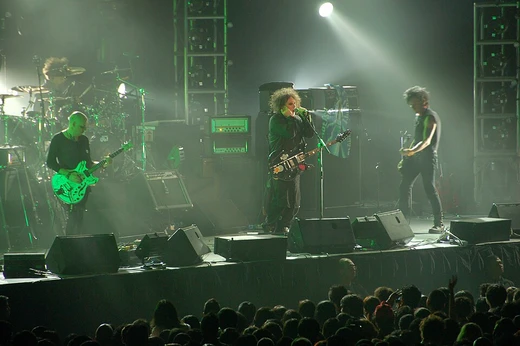
- Robert Smith has described the emotional experience of performing Lovesong live as distinct from the rest of the set—audiences often go silent during the verses and then erupt during the chorus, creating a collective emo
- The song appears on Disintegration, an album whose other tracks deal with themes of decay, isolation, and self-erasure, making Lovesong's affirmative declaration of love a deliberate and jarring contrast within the recor
More in Lore & Symbolism
Elsewhere in the The Cure universe
Spotted an error? Know more?
This is a living reference — every entry is fact-audited, and reader corrections feed straight into our audit queue. Suggest an edit · See this site's audit record