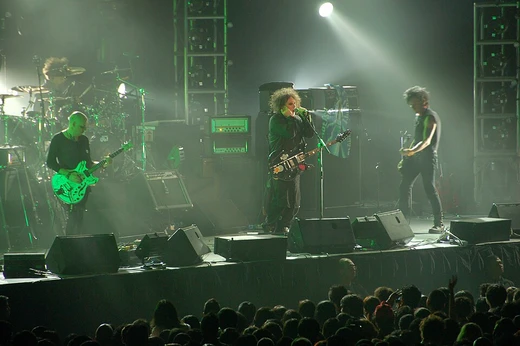
Three Imaginary Boys Concept
Three archetypes of youth: innocence, romance, and cynicism—locked in a single, restless identity.

Three Imaginary Boys isn't a story about three fictional characters—it’s the fractured mythos that birthed The Cure’s early identity. Rooted in the band’s 1979 debut album, the title was actually lifted from a line in the song 'Object' and was never originally intended as a conceptual statement about archetypes. Over time, fans and critics have retroactively framed the album as a tripartite lens through which the band explored youth, heartbreak, and existential dread, but the 'three boys' were never a deliberate persona system for Robert Smith.
- Origin
- Debut album 'Three Imaginary Boys' (1979)
- Primary Architect
- Robert Smith
- Core Theme
- The duality and trinity of the human psyche
- Musical Era
- Post-Punk to Goth Rock transition
- Status
- Foundational concept, evolved into broader artistic themes
Lore & Background
Though the band members were real people, the album cover and early press materials leaned into abstraction, presenting them as figures in a surreal tableau rather than just musicians. This allowed The Cure to blur reality with artistic interpretation. As the band’s sound matured from jangly post-punk to darker gothic rock, these three boys gradually merged back into a singular, more complex identity. Yet their influence remains the bedrock of the group’s emotional landscape—a ghost that still haunts every chord.
In Their Own Story
In a room painted with peeling wallpaper and lit by a single flickering bulb, three shadows stretch across the floor. One shadow dances with a skipping rope, laughing at nothing; another leans against the wall, clutching a wilted flower to their chest; the third sits in the corner, sharpening a knife with cold indifference. They do not speak to each other, yet when they move together, a chord rings out that sounds like both a nursery rhyme and a funeral dirge.
Reader's Guide
Fans often interpret the Three Imaginary Boys as an early manifestation of dissociation or the fragmentation of self during adolescence. The lyrics from this era frequently oscillate between these three states within a single song, creating a sense of internal conflict that resonates deeply with listeners. The mythology extends to the band’s visual aesthetic: Robert Smith’s androgynous appearance served as a canvas for all three archetypes at once. This ambiguity allowed fans to project their own struggles onto the music, finding comfort in the idea that pain, joy, and apathy are not mutually exclusive but rather parts of a whole. Ultimately, this concept gave Smith a safe distance to explore dark themes without being consumed by them. It established a tradition where The Cure’s music acts as a mirror—reflecting the listener’s own internal trinity back at them through layers of reverb and melancholy.
Did You Know?
- The album title was taken from a line in the song 'Object' and was not originally intended as a conceptual statement about archetypes.
- Early promotional photos often featured the band in a surreal, staged setting to emphasize the 'imaginary' nature of their concept.
- The concept helped bridge the gap between the band's poppier early work and their later, darker gothic sound.
Frequently Asked Questions
What is the Three Imaginary Boys Concept?
This concept originates from the band’s 1982 debut album and is not a narrative about three separate characters. Instead, it represents a fractured mythos where Robert Smith’s songwriting embodies three warring psychological archetypes.
Who created the Three Imaginary Boys Concept?
Robert Smith serves as the primary architect behind this foundational idea. He used it to define the band’s early identity during their transition from post-punk to goth rock.
What archetypes define the Three Imaginary Boys Concept?
The concept divides the human psyche into the innocent child, the romantic lover, and the cynical adult. These three forces exist within a single restless identity to explore themes of youth and existential dread.
Why is the Three Imaginary Boys Concept important?
This tripartite lens was crucial for exploring heartbreak and the duality of the human psyche during the band’s formative years. While foundational, the idea eventually evolved into the broader artistic themes seen in their later work.
Does the Three Imaginary Boys Concept have an ending?
There is no specific narrative conclusion because the concept is not a linear story about fictional characters. It functions as an artistic framework that was eventually absorbed into the band’s wider creative evolution.
More in Lore & Symbolism
Elsewhere in the The Cure universe
Spotted an error? Know more?
This is a living reference — every entry is fact-audited, and reader corrections feed straight into our audit queue. Suggest an edit · See this site's audit record