The Spider's Web
Fine threads, tight knots: where love and fate tangle and hold.

The spider's web keeps popping up across The Cure's work — in lyrics, in the art tucked into album sleeves, in the way a fan re-listens to a track and pulls out another thread they'd missed. It's not just a pretty image. It names something specific: how love, obsession, and fate wrap around you in threads so fine they're almost invisible, yet strong enough that you can't just step out. That tension — delicate beauty and a slow trap sitting in the same gesture — runs right through the melancholy and desire that define the band's sound.
- Role
- Symbolic motif in lyrics and imagery
- Affiliation
- The Cure's thematic universe
- First appears
- Prominently in the album 'Disintegration' (1989)
- Status
- Recurring symbol in fan lore
Lore & Background
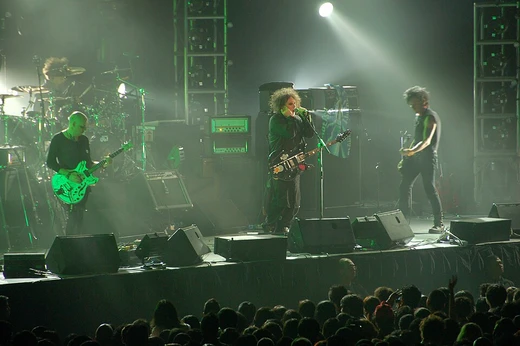
In The Cure's world, the spider's web is not merely a natural object but a profound emblem of the human condition. It weaves through songs like 'Lullaby' and 'The Same Deep Water as You,' where the spider becomes a predator of the heart, spinning silk that binds the listener in a dance of vulnerability and surrender. The web's fragility mirrors the transient beauty of relationships, while its strength suggests the inescapable pull of memory and regret. Fans often interpret the web as a visual representation of Robert Smith's lyrical themes: the sticky threads of past loves, the intricate patterns of obsession, and the quiet horror of being caught in one's own emotions. The motif resonates with the band's gothic aesthetic, where nature and decay intertwine, and the web becomes a stage for intimate dramas of longing and loss. Beyond individual songs, the spider's web appears in album art and stage design, reinforcing its role as a cornerstone of The Cure's symbolic lexicon. It invites listeners to see beauty in entrapment and to find meaning in the delicate, often painful, connections that define our lives.
In Their Own Story
In a dim room, the air thick with incense and old vinyl, a fan traces the pattern of a spider's web drawn on a notebook. The lines cross and recross, each intersection a memory of a concert, a lyric, a whispered secret. Outside, rain taps the window like a heartbeat. She thinks of a line from a song—'the same deep water as you'—and feels the web tighten around her chest, not in pain but in recognition. The spider is patient, and so is the music, waiting for her to step into its embrace once more.
Reader's Guide
The spider's web in The Cure's lore is a rich tapestry of meaning, woven from the band's signature blend of romanticism and dread. Fans explore its symbolism through the lens of Robert Smith's lyrics, where the web often represents the delicate balance between desire and destruction. In 'Lullaby,' the spider is a seducer, its web a trap of sweet promises, while in 'Disintegration,' the web becomes a metaphor for the unraveling of self and relationship. This motif also ties into the band's visual identity, from the cover of 'Disintegration' to the spider imagery in concert visuals. It invites analysis of how The Cure uses nature to reflect inner turmoil, with the web as a perfect symbol of both beauty and entrapment. Fans debate whether the web is a warning or a comfort, a representation of fate or free will, adding depth to the band's already complex mythology. Ultimately, the spider's web is a mirror for the listener's own experiences, a space where melancholy and hope coexist. It is a testament to The Cure's ability to transform the ordinary into the profound, leaving fans to find their own meaning in its tangled strands.
Did You Know?
- The spider's web motif is often linked to the song 'Lullaby,' where the spider is a central figure. | Fans have created extensive fan art and poetry exploring the web as a symbol of emotional entanglement. | The web appe
More in Lore & Symbolism
Elsewhere in the The Cure universe
Spotted an error? Know more?
This is a living reference — every entry is fact-audited, and reader corrections feed straight into our audit queue. Suggest an edit · See this site's audit record