The Mirror and Reflection
Face the reflection; confront the fractured self.

The Mirror and Reflection is a recurring symbolic motif in The Cure's artistic universe, representing duality, self-confrontation, and the haunting nature of identity. It appears across album artwork, lyrics, and music videos as a tool for exploring the tension between inner truth and outer facade, often tied to themes of love, loss, and existential despair. More than a prop, the mirror is a threshold—a shimmering surface where the band's gothic romanticism meets the cold shock of self-recognition, inviting listeners to peer into the abyss of their own making.
- Role
- Recurring symbolic motif
- Affiliation
- The Cure's visual and lyrical mythology
- First appears
- Prominently in the late 1970s and early 1980s
- Status
- Active in fan interpretation and band imagery
Lore & Background
In The Cure's world, mirrors are not mere objects but portals to the subconscious. They appear in songs like 'The Lovecats' as playful yet unsettling reflections, and in darker tracks such as 'One Hundred Years' where they symbolize the fragmentation of the self under societal decay. The band's album covers, like 'Pornography' and 'Disintegration', use reflective surfaces to evoke isolation and the blurring of reality. Robert Smith's lyrical use of mirrors often depicts characters trapped in self-observation, unable to escape their own gaze or the past that stares back. In 'The Figurehead', the mirror becomes a confessional—a cold, silvered witness to guilt and longing—while in 'Lullaby', it twists into a predator's eye, reflecting the suffocating intimacy of obsession.
In Their Own Story
In a dimly lit room, a figure stands before a cracked mirror. The glass is veined with silver fractures, each shard reflecting a different version of the same face—some weeping, some laughing, some frozen in silent scream. The air smells of rain and old roses. The figure reaches out, but the reflection does not move. Instead, it whispers a melody from a forgotten song, and the room begins to dissolve into a sea of black water, where the mirror floats like a broken promise. The figure sinks, not into drowning, but into a quiet knowing: the reflection was never the enemy—it was the only honest thing in the room.
Reader's Guide
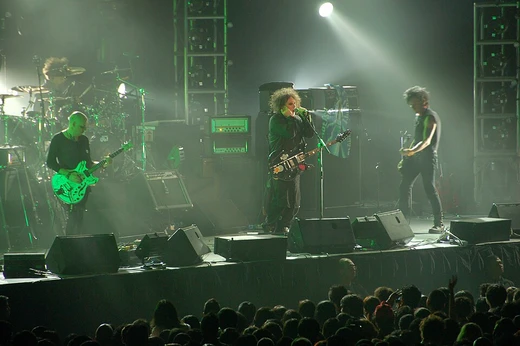
The Mirror and Reflection in The Cure's universe is a lens for exploring the duality of human experience. Fans often interpret the motif as a symbol of the band's own artistic journey—constantly examining and redefining their identity through music. The mirror can represent the painful clarity of self-awareness, as in 'The Figurehead', or the illusion of connection, as in 'Lullaby'. It also ties into the gothic romanticism of the band's aesthetic, where beauty and decay coexist. For listeners, the reflection becomes a tool for introspection, inviting them to confront their own shadows. The motif's persistence across decades underscores The Cure's fascination with the unreliability of perception and the eternal search for authentic selfhood amidst the masks we wear. In the band's live performances, the mirror often appears as a stage device—a blackened glass that reflects the audience back at themselves, turning the concert into a shared act of self-examination.
Did You Know?
- The mirror motif appears in The Cure's earliest demo recordings, including a song called 'The Mirror' from 1978.
- Robert Smith has cited the use of mirrors in film noir and surrealist art as influences on the band's visual style.
- Fans have created elaborate theories linking mirror imagery to the concept of 'the other' in the band's lyrics.
- The mirror is a central element in the unofficial mythology of the band's 'Trilogy' concerts, representing the passage between worlds.
More in Lore & Symbolism
Elsewhere in the The Cure universe
Spotted an error? Know more?
This is a living reference — every entry is fact-audited, and reader corrections feed straight into our audit queue. Suggest an edit · See this site's audit record