Darkwave Emergence (1982-1984)
Where shadows found a voice and sorrow became art.

The Darkwave Emergence era (1982-1984) marks a pivotal transformation for The Cure, as the band shed their post-punk skin and plunged into a shadowy, atmospheric sound that would define their early gothic identity. This period, spanning from the album *Pornography* (1982) through the standalone singles 'Let's Go to Bed' (1982), 'The Walk' (1983), and 'The Lovecats' (1983) to the album *The Top* (1984), saw Robert Smith and company embrace dense, brooding textures, minimalist rhythms, and lyrics steeped in existential dread and romantic despair. It’s the era that cemented the band’s cult status and laid the groundwork for the gothic rock movement, even as they resisted the label.
- Character
- The Cure (band)
- Role
- Defining the darkwave/gothic rock sound
- Affiliation
- Fiction Records
- First appears
- 1982 album *Pornography*
- Status
- Transitional era, ended with 1984's *The Top*, but includes the non-album singles 'Let's Go to Bed', 'The Walk', and 'The Lovecats'
Lore & Background
This era began in the wake of *Faith* (1981), as The Cure retreated into a colder, more introspective space. *Pornography* (1982) was a harrowing descent into madness, recorded in a state of emotional and chemical turmoil, with Robert Smith’s baritone vocals and claustrophobic production creating a soundscape of pure isolation. The album’s stark, monochrome cover and the band’s shift to heavy makeup and disheveled hair visually mirrored the music’s bleakness. The single 'The Hanging Garden' became an anthem for a generation of disaffected youth, though the band itself nearly imploded under the weight of its own darkness. Between *Pornography* and *The Top*, the band released three standalone singles—'Let's Go to Bed' (1982), 'The Walk' (1983), and 'The Lovecats' (1983)—which are integral to the darkwave period, despite not appearing on either album.
In Their Own Story
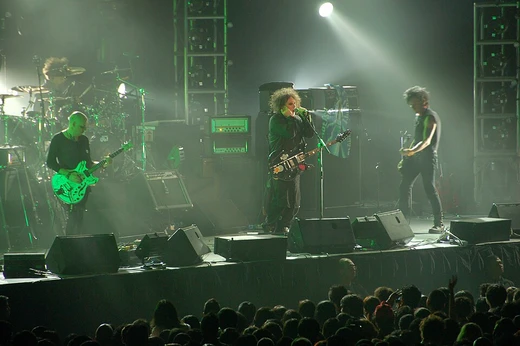
The fog clung to the stage like a second skin. Robert stood motionless, his smeared lipstick and tangled hair catching the single white spotlight. The crowd swayed in a trance as the bassline of 'One Hundred Years' throbbed through the damp air. No one cheered; they simply existed in the same suffocating space, breathing the same despair. For a moment, the boundary between performer and audience dissolved—they were all ghosts in a machine built from echo and reverb.
Reader's Guide
Sonic characteristics: Deep, droning basslines; sparse, echoing drums; layered guitar textures with heavy chorus/flanger effects; Robert Smith’s low, mournful vocals often double-tracked. Production is intentionally murky and claustrophobic, with reverb used as a weapon. Visual aesthetic: Monochrome palettes, heavy black eyeliner and smudged lipstick, disheveled hair, and thrift-store gothic clothing (long coats, tattered lace). The iconic 'Cure look'—pale skin, dark lips, and wild hair—was born here. Lyrical themes: Existential despair, madness, failed relationships, death, and the search for meaning in a void. Often surreal and poetic, with recurring imagery of water, mirrors, and empty rooms. Cultural impact: This era defined the gothic rock genre, influencing bands like Siouxsie and the Banshees (with whom Smith briefly played) and later acts such as The Sisters of Mercy. It also alienated mainstream audiences, but built a fiercely loyal underground following that persists today.
Did You Know?
- The album *Pornography* was recorded over approximately two months (March to April 1982) at RAK Studios, with mixing in May, totaling about 8-9 weeks.
- Robert Smith has said that *Pornography* was intended to be the band's final album, as he felt they had reached a creative dead end.
- The song 'The Lovecats' (1983) was a deliberate stylistic departure from the darkwave sound, showcasing Smith's playful side and helping the band survive commercially.
- During this era, Smith briefly joined Siouxsie and the Banshees as a guitarist, which influenced his use of more psychedelic guitar effects.
More in Eras & Musical Styles
Elsewhere in the The Cure universe
Spotted an error? Know more?
This is a living reference — every entry is fact-audited, and reader corrections feed straight into our audit queue. Suggest an edit · See this site's audit record