Neo-Gothic (2004-2008)
Darkness sharpened. Atmosphere called back home.

2004. After a stretch where the band went mostly quiet — the early 2000s felt like a long pause — *The Cure* dropped and the 4Tour hit the road, and something clicked back in place. The Neo-Gothic era (2004-2008) sounds like the band reaching into their own post-punk and gothic rock vocabulary, that darker, more atmospheric stuff, and running it through modern production. It's the thread connecting what they built in the 1980s to whatever creative spark came back after that quiet stretch — not a reinvention, just The Cure going back to what they actually do when the lights are low.
- Timeframe
- 2004-2008
- Associated Tour
- 4Tour (2008)
Lore & Background
The Neo-Gothic era emerged as The Cure sought to reclaim their darker sonic identity after the more experimental and pop-oriented albums of the 1990s. The self-titled album *The Cure* (2004) was co-produced by Robert Smith and Ross Robinson, known for his work with nu-metal bands, but the result was a brooding, textured sound that echoed their early gothic masterpieces while incorporating a raw, modern edge. Songs like 'The End of the World' and 'Lost' showcased a band comfortable with its legacy yet unafraid to explore new emotional depths.
In Their Own Story
In a dimly lit studio, the band huddled around a mixing board, the air thick with the scent of ozone and old leather. Robert Smith's voice, a low murmur, cut through the hum of feedback. 'This one needs to feel like a storm rolling in,' he said, adjusting a dial. The others nodded, their faces half-shadowed. Outside, rain began to fall, matching the mood inside. The track, 'alt.end,' swelled with a dark, cinematic grace, a testament to their enduring craft.
Reader's Guide
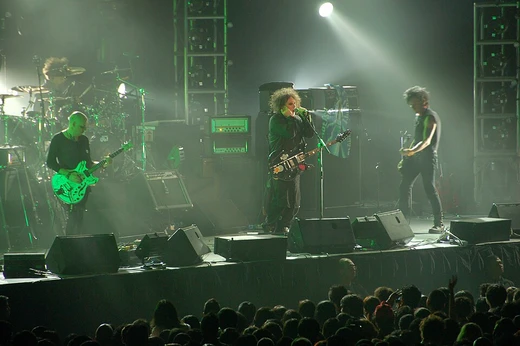
Sonic characteristics: Guitars are dense and layered, often alternating between clean arpeggios and distorted swells that feel like fog rolling over a moor. Basslines are the heartbeat—pulsing, melodic, and locked in a hypnotic dance with the drums. Synths appear sparingly, used as subtle washes of color rather than dominant textures, like distant lightning on a dark horizon. Vocals are restrained and breathy, prioritizing texture and atmosphere over soaring hooks; Smith murmurs and croons as if confiding secrets to the void. Visual aesthetic: The band stripped away the theatrical excess of the 1980s and '90s. Smith’s smeared lipstick and teased hair were replaced by a minimalist, almost monastic look: black suits, simple jewelry, and a face free of heavy makeup. Stage designs were stark—bare platforms, pools of shadow, and sharp beams of light that cut through the darkness like blades. The elegance was in the restraint, every element deliberate. Lyrical themes: The lyrics orbit loss, longing, and existential dread, but with a weary resignation rather than melodrama. Storms, endings, and the slow erosion of memory recur as motifs—songs like 'The Promise' and 'I Don’t Know What’s Going On' read like entries in a journal written at twilight. The band confronts its own legacy and the passage of time without flinching. Cultural impact: This era cemented The Cure as elder statesmen of gothic rock, drawing in younger listeners who discovered them through the album’s raw, modern edge while rewarding longtime fans with a return to form. The 2008 4Tour, where the band co-headlined with acts like Interpol and 65daysofstatic, showcased their versatility and relevance, with setlists that changed nightly and dug deep into their catalog—a testament to their enduring pull on the alternative scene.
Did You Know?
- The self-titled album was co-produced by Robert Smith and Ross Robinson, blending Smith's atmospheric vision with Robinson's raw production style.
- The 2008 4Tour featured The Cure performing a different setlist each night, often including deep cuts and rarities, and is considered the capstone of the Neo-Gothic era.
- Robert Smith has described the Neo-Gothic era as a 'cleansing' of their sound, stripping away excess to focus on core emotions.
More in Eras & Musical Styles
Elsewhere in the The Cure universe
Spotted an error? Know more?
This is a living reference — every entry is fact-audited, and reader corrections feed straight into our audit queue. Suggest an edit · See this site's audit record