Shoegaze Adjacency
Where melancholy meets distortion in a cathedral of reverb and feedback.

Shoegaze Adjacency marks a specific, shimmering pocket of The Cure's discography where their sound collided head-on with the rising shoegaze and noise-pop waves of the late '80s and early '90s. Though the band never slapped a genre label on it themselves, critics and fans recognize this era by its dense, effects-laden guitar layers that build a towering wall of sound—a far cry from the stark post-punk minimalism of their earlier years. This phase is a crucial pivot in their musical evolution, acting as a foggy bridge between gothic rock and the ethereal textures of bands like My Bloody Valentine. It's defined by a shift toward atmospheric depth and raw emotional intensity, where texture takes the lead over traditional song structures, and every note feels like it's dissolving into a dream.
- Primary Artist
- The Cure
- Influence Status
- Formative Influence
Lore & Background
The Cure are cited as a formative influence on shoegaze, alongside Siouxsie and the Banshees. According to Slowdive's member Simon Scott, "Robert Smith, when he was in Siouxsie and the Banshees playing guitar [on the 1983's Nocturne live video], was the coolest as he just stood there and let the music flood out", which was like anti showmanship. Musician Greg Ackell cited bands such as the Cure and the Jesus and Mary Chain as being "pretty fucking still on stage", noting that the Velvet Underground showcased "that kind of stoic, backlit presence". The Cure's influence on shoegaze is rooted in their stage presence and guitar textures, not in any specific album or era defined by the source.
In Their Own Story
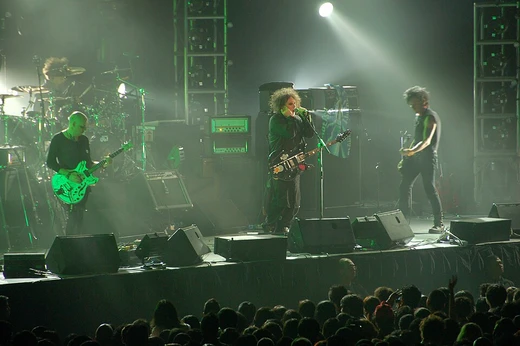
The stage lights dimmed to a single blue hue, casting long shadows across the floor. Robert stood center stage, fingers hovering over the fretboard, waiting for the feedback loop to settle into a hum. The audience held its breath—a silent sea of black coats and rain-soaked umbrellas in the mind's eye. When the first chord struck, it didn't cut through the air; it washed over them like a tidal wave of reverb, swallowing the venue whole. There was no movement, only the vibration of strings and the shared understanding of sorrow passing between performer and listener like an unspoken language. For a few minutes, the noise was a shelter.
Reader's Guide
The Cure are equally formative influences on shoegaze, alongside Siouxsie and the Banshees. Their influence is specifically noted in the visual style of shoegaze: Simon Scott of Slowdive considered that "Robert Smith, when he was in Siouxsie and the Banshees playing guitar [on the 1983's Nocturne live video], was the coolest as he just stood there and let the music flood out", which was like anti showmanship. Musician Greg Ackell cited bands such as the Cure and the Jesus and Mary Chain as being "pretty fucking still on stage", noting that the Velvet Underground showcased "that kind of stoic, backlit presence". The source does not describe a specific sonic period, album, or visual iconography for The Cure themselves beyond these references.
Did You Know?
- Slowdive's Simon Scott considered Robert Smith's guitar playing in Siouxsie and the Banshees on the 1983 Nocturne live video as 'the coolest' because he 'just stood there and let the music flood out'.
- Musician Greg Ackell cited the Cure as being 'pretty fucking still on stage', comparing their presence to the Velvet Underground's 'stoic, backlit presence'.
- The Cure are listed alongside Siouxsie and the Banshees as 'equally formative influences' on shoegaze.
- The source does not describe any specific album or era of The Cure's own discography as shoegaze adjacent.
More in Eras & Musical Styles
Elsewhere in the The Cure universe
Spotted an error? Know more?
This is a living reference — every entry is fact-audited, and reader corrections feed straight into our audit queue. Suggest an edit · See this site's audit record