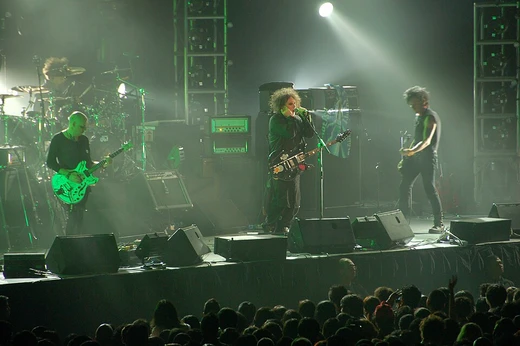
Dark Minimalism Era
Where every note feels like a held breath, and the quiet is the loudest thing in the room.

The Dark Minimalism Era marks a seismic shift in The Cure's sound, shedding the tangled guitars and jagged post-punk edges of their early years for a stark, synth-driven atmosphere. Spanning roughly from the mid-1980s into the early 1990s, this period strips the band's music down to its raw bones—spare keyboards, a pulsing bass, and Robert Smith's voice, often half-whispered as if confiding in the dark. It's the sound of a band learning that silence can hit harder than a scream, and it forged the emotional core of their legacy, setting a blueprint for generations of alternative acts who would follow into the shadows.
- key_figure
- Robert Smith
- primary_genre
- Gothic Rock / Alternative
- defining_sound
- Sparse instrumentation and synthesizer textures
- visual_hallmark
- Messy black hair, dark makeup, and vintage coats
- cultural_status
- Foundational to the Goth subculture
Lore & Background
Visually, this era crystallized Robert Smith into the definitive gothic icon—the wild crown of black hair, the smeared lipstick and eyeliner, the thrift-store lace and velvet that looked both timeless and haunted. But this wasn't just fashion as costume; it was the outer skin of the music's inner world: a place where daylight barely reaches, and emotions are left raw and unbandaged. This aesthetic transformed The Cure from a beloved cult post-punk act into international symbols of melancholic beauty, proving that a whispered chord could shake stadiums as surely as a roar.
In Their Own Story
The rain slicked the cobblestones, reflecting the dim glow of a single streetlamp that flickered against the encroaching fog. Inside the small venue, the air was thick with anticipation as the first notes drifted out—thin, shimmering waves of synthesizer that seemed to float above the silence. There were no thunderous drums or screeching guitars here, only a steady, heartbeat-like pulse and a voice that sounded like it was whispering secrets from a distant memory. As the crowd swayed in unison, heads bowed, they weren't just listening to music; they were walking through a shared dream of beautiful sadness.
Reader's Guide
Sonic characteristics of this era are defined by a deliberate reduction in instrumentation. Heavy use of synthesizers replaces complex guitar layers, creating vast, atmospheric soundscapes that feel both intimate and expansive. The rhythm section often settles into repetitive, hypnotic patterns rather than driving rock beats. Visually, the aesthetic is iconic: dark, vintage clothing paired with signature messy black hair and heavy eye makeup. This look rejects glamour in favor of a raw, romanticized decay that mirrors the music's emotional tone. It became the uniform for a generation exploring darker themes. Lyrical themes focus intensely on isolation, heartbreak, and existential dread, yet often framed through a lens of poetic beauty rather than pure nihilism. The cultural impact was profound, solidifying the band as leaders of the gothic movement and influencing decades of alternative music.
Did You Know?
- This era helped define the visual language of the global Goth subculture.
- The shift toward minimalism allowed for greater emotional resonance in their ballads.
- Many tracks from this period rely heavily on synthesizers rather than traditional rock instrumentation.
- Robert Smith's distinctive look became a permanent symbol of alternative music history during this time.
Origins and Early Evolution
The band's roots trace back to school friendships at Notre Dame Middle School in Crawley, where Robert Smith and Lol Tolhurst first performed together in 1973. Their musical journey evolved through several iterations, beginning with the short-lived group Obelisk before transitioning into Malice in early 1976. Influenced heavily by punk rock's emergence, the lineup shifted repeatedly until settling as a trio known initially as Easy Cure. A pivotal moment occurred when their original label, Ariola-Hansa, demanded they perform cover songs rather than their own material; the band refused this commercial compromise and terminated the contract. Following the departure of guitarist Porl Thompson due to stylistic differences with Smith's minimalist vision, the group officially became The Cure in 1978. They quickly secured a deal with Chris Parry's Fiction label after distributing demo tapes, releasing their controversial debut single "Killing an Arab" later that year, which sparked debate over its title but was grounded in Albert Camus's literature.
The Descent into Dark Minimalism
Following the release of their debut album Three Imaginary Boys in 1979, Robert Smith expressed dissatisfaction with what he perceived as a superficial and lightweight sound. This creative restlessness drove the band toward a significantly darker and more tormented aesthetic starting with their second album, Seventeen Seconds, released in 1980. This shift marked a decisive move away from new wave pop toward a stark, minimalist approach that would heavily influence the emerging gothic rock genre. The trajectory continued to deepen with their fourth album, Pornography, in 1982, which represented the absolute zenith of this somber era. During these years, Smith's songwriting focused on emotional intensity and atmospheric density rather than conventional pop structures. This period established the band as pioneers within the post-punk movement, setting them apart from contemporaries with their unique blend of melancholy and rhythmic repetition before they eventually began reintroducing more accessible pop elements in subsequent works.
Mainstream Breakthrough and Commercial Success
After navigating their darkest creative periods, The Cure successfully transitioned into mainstream popularity by blending their signature atmospheric style with more melodic songwriting. This evolution culminated in a series of highly successful albums, including Kiss Me, Kiss Me, Kiss Me (1987), the critically acclaimed Disintegration (1989), and Wish (1992). These records propelled the band to global recognition, resulting in the sale of over 30 million records worldwide. Their catalog features some of the most enduring rock anthems of the era, such as "Boys Don't Cry," "Just Like Heaven," "Lovesong," and "Friday I'm in Love." The band's ability to maintain artistic integrity while achieving commercial viability was further recognized when they were inducted into the Rock and Roll Hall of Fame in 2019. Despite numerous lineup changes over the decades, Smith has remained the sole constant member, guiding the group through various musical phases while retaining a core identity that resonates with fans across generations.
Longevity and Modern Resurgence
Robert Smith's enduring presence as the only constant member since the band's formation in 1976 serves as the anchor for The Cure's remarkable longevity. While the lineup has seen significant turnover, featuring current members like Simon Gallup, Roger O'Donnell, Jason Cooper, and Reeves Gabrels, the group has consistently managed to evolve without losing its essence. After a sixteen-year hiatus from releasing all-new studio material, the band returned in 2024 with their fourteenth album, Songs of a Lost World. This release was met with widespread critical acclaim and commercial success, topping charts in multiple countries and proving that the band's creative vitality remains intact decades after their initial rise. With over 40 singles released throughout their career, The Cure has successfully bridged the gap between their post-punk origins and modern audiences, securing a legacy defined by both historical significance and contemporary relevance.
More in Eras & Musical Styles
Elsewhere in the The Cure universe
Spotted an error? Know more?
This is a living reference — every entry is fact-audited, and reader corrections feed straight into our audit queue. Suggest an edit · See this site's audit record