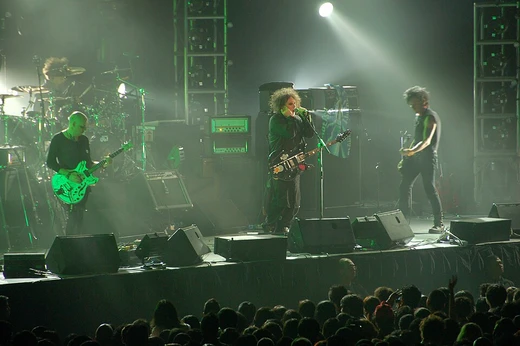
Dream Pop Atmosphere
A sonic haze of melancholy where reverb-drenched guitars curl around your ribs and emotional vulnerability floats like fog through the speakers.

Within the sprawling, rain-slicked discography of The Cure, a specific sonic texture emerged on their eighth studio album, *Disintegration*, released on 2 May 1989 by Fiction Records. This atmosphere is defined by the album's return to the introspective gothic rock style the band had established in the early 1980s. It captures a moment when melancholy was amplified through technology—synthesizers, keyboards, and slow, droning guitar progressions—creating a soundscape that feels both intimate and vast. The album's production was strongly influenced by Robert Smith's lapse back into the use of hallucinogenic drugs, the effects of which shaped the record's dismal, depressing form. This style became synonymous with the band's late 1980s output, signaling a shift toward more introspective songwriting and a deliberate abandonment of the pop singles they had previously released.
- Primary Architect
- Robert Smith
- Key Period
- Late 1980s to Early 1990s
- Signature Sound
- Layered Guitars and Reverb
- Associated Album
- Disintegration
- Genre Influence
- Shoegaze and Dream Pop
Verified Timeline
Lore & Background
The development of this atmosphere marked a turning point in the band's history, moving away from the pop successes of *Kiss Me, Kiss Me, Kiss Me* and toward a darker aesthetic. As he neared the age of 30, vocalist and guitarist Robert Smith felt an increased pressure to follow up on the band's pop successes with a more enduring work. This, coupled with a distaste for the group's newfound popularity, caused Smith to lapse back into the use of hallucinogenic drugs, the effects of which had a strong influence on the production of the album. Smith deliberately sought to record an album that was depressing, as it was a reflection of the despondency he felt at the time. He sought to recreate the atmosphere of the band's fourth album *Pornography* (1982). The sound of the album was a shock to the band's American label Elektra Records, who requested Smith shift the release date back several months, with Smith recalling they thought he was being 'wilfully obscure'. Despite the dark mood, keyboardist Roger O'Donnell commented in 2009 that the atmosphere in the studio was still upbeat during the sessions, noting: 'I remember very clearly laughing and joking and fooling around in the control room while Robert was singing "Disintegration", and then all of us trying to be serious when he came in to listen back.'
In Their Own Story
The rain tapped rhythmically against the cold glass of the windowpane, a Morse code for the lonely, as the headphones settled over his ears. In the dim light of the room, shadows stretched long across the floorboards like sleeping cats, matching the mood of the music swelling in his mind. There was no rush here, only a slow drift through layers of sound that felt like walking through water—each step a ripple of guitar and synth. He closed his eyes and let the melody wash away the noise of the outside world, leaving only the quiet hum of something like hope.
Reader's Guide
The sonic landscape relies heavily on synthesizers and keyboards, slow, 'droning' guitar progressions, and Smith's introspective vocals. Much of the album made use of a considerable amount of guitar effects, with 'Prayers for Rain' seeing Thompson and Smith 'treating their work to heavy-duty flanging, delay, backwards-run tapes and more to set the slow, moody crawl of the track.' The album's opener, 'Plainsong', sets the mood by 'unravelling ever so slowly in a shower of synths and guitars, before Smith steps up to the mic, uttering snatches of lyrics ('I'm so cold') as if he were reading from something as sacred as the Dead Sea Scroll.' The album's third track, 'Closedown', contains layers of keyboard texture complemented with a slow, gloomy guitar line. Despite the serious subject matter, the album includes 'Lovesong', an upbeat track that became a hit in the United States, which Smith wrote as a wedding present for Mary Poole. Lyrical themes explore isolation, romantic longing, and existential dread without offering easy resolutions—only the comfort of shared sadness. Culturally, this specific mood helped define the emotional core of the alternative rock scene, with Stephen Thomas Erlewine of AllMusic calling it the 'culmination of all the musical directions the Cure were pursuing over the course of the '80s'.
Did You Know?
- The album was recorded at Hookend Recording Studios in Checkendon, Oxfordshire, with co-producer David M. Allen from late 1988 to early 1989.
- Following the completion of the mixing, founding member Lol Tolhurst was fired from the band due to his increasing alcoholism.
- The album reached number three on the UK Albums Chart and number 12 on the US Billboard 200, and remains the band's highest-selling record to date with more than four million copies sold worldwide.
- The song 'Lovesong' peaked at number two on the Billboard Hot 100 and was written by Smith as a wedding present for his fiancée Mary Poole.
- The album was placed at number 116 on Rolling Stone magazine's list of the '500 Greatest Albums of All Time' in 2020.
More in Eras & Musical Styles
Elsewhere in the The Cure universe
Spotted an error? Know more?
This is a living reference — every entry is fact-audited, and reader corrections feed straight into our audit queue. Suggest an edit · See this site's audit record