Dream Pop / Shoegaze Precursor (1989-1990)
Where darkness melted into a cathedral of sound.

The Dream Pop / Shoegaze Precursor era (1988-1989) marks a transitional period for The Cure, where the band began to explore lush, atmospheric soundscapes that would later influence the shoegaze movement. This phase is characterized by a shift from the post-punk and gothic rock of the 1980s toward more textured, ethereal compositions, blending shimmering guitars with introspective lyrics. It serves as a bridge between their earlier dark romanticism and the more experimental, dreamlike sounds of the early 1990s, cementing their role as pioneers of alternative rock's sonic evolution.
- Era
- 1988-1989
- Key Album
- Disintegration (1989) — its sound defines this era
- Musical Style
- Dream pop, shoegaze precursor, atmospheric rock
- Role
- Transitional period expanding the band's sonic palette
- Affiliation
- The Cure (Robert Smith, Simon Gallup, Porl Thompson, Boris Williams, Roger O'Donnell)
- First Appears
- Late 1980s, with Disintegration's release
- Status
- Concluded by 1990 with the shift toward more pop-oriented work
Lore & Background
In the late 1980s, The Cure entered a period of profound creative exploration, driven by Robert Smith's fascination with layered guitar textures and ambient production. This era saw the band embracing a denser, more immersive sound, often described as 'dream pop' or a precursor to shoegaze. Tracks from this time featured swirling, reverb-drenched guitars, slow tempos, and Smith's haunting vocals, creating a sense of melancholic drift. The band's live performances during this period were noted for their hypnotic, wall-of-sound approach, influencing a generation of musicians who would later define the shoegaze genre.
In Their Own Story
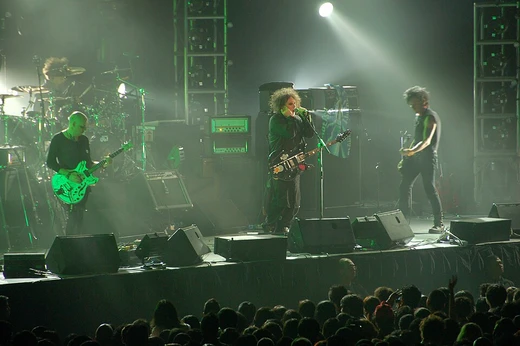
The fog clung to the stage as the first chords of 'Pictures of You' echoed through the venue. A sea of swaying bodies, faces upturned, lost in the shimmering cascade of guitars. Robert Smith stood motionless, his voice a distant whisper over the roar of sound. The air was thick with the scent of rain and sweat, and for a moment, time seemed to slow. This was the sound of a band unbound—a dream caught between waking and sleep, where every note felt like a memory forming in real time.
Reader's Guide
Sonic characteristics: Lush, layered guitar work with heavy use of chorus, reverb, and delay; slow to mid-tempo rhythms; prominent basslines; ethereal vocals often buried in the mix. The production emphasizes atmosphere over immediacy, with songs building gradually to cathartic peaks. Visual aesthetic: Robert Smith's iconic smeared lipstick and disheveled hair continued, but the fashion leaned toward more flowing, romantic silhouettes—velvet jackets, loose shirts, and dark, draped fabrics. The band's album art often featured hazy, dreamlike imagery, reflecting the music's ethereal quality. Lyrical themes: Introspection, lost love, nostalgia, and existential longing. The lyrics became more abstract and poetic, focusing on emotional landscapes rather than narrative storytelling. Cultural impact: This era solidified The Cure's influence on the emerging shoegaze scene, with bands like My Bloody Valentine and Slowdive citing their work. It also expanded their audience beyond goth and post-punk fans, attracting listeners drawn to atmospheric, emotionally resonant music.
Did You Know?
- The album 'Disintegration' was widely acclaimed upon release and is now considered a masterpiece and a defining work of the dream pop genre.
- Though often compared to Cocteau Twins, there is no widely-known, specific statement from Robert Smith that the sound of this era was directly inspired by them.
- The Cure's use of non-standard guitar tunings during this period became a hallmark of their sound, influencing many shoegaze guitarists.
- Despite its dark themes, 'Disintegration' was a commercial success, reaching the top 10 in multiple countries.
More in Eras & Musical Styles
Elsewhere in the The Cure universe
Spotted an error? Know more?
This is a living reference — every entry is fact-audited, and reader corrections feed straight into our audit queue. Suggest an edit · See this site's audit record