Grunge-Adjacent (1994-1996)
Distortion, desperation, and the death rattle of pop perfection.

The Grunge-Adjacent era (1994-1996) finds The Cure in a deliberate stumble away from the shimmering pop heights of 'Wish,' trading cathedral reverb for the clatter of overdriven amps. This is the sound of a band inhaling the grunge movement's raw, flannel-clad anger—distorted guitars that snarl rather than swoon, lyrics that pick at emotional scabs—while still clinging to their own melancholic pop DNA. The era's anchor, 'Wild Mood Swings' (1996), is a patchwork of contradictions: the sugar-rush jangle of 'Mint Car' sits uneasily beside the Eastern-tinged, obsessive drone of 'The 13th,' and the psychedelic detour 'Gone!' feels like a fever breaking. It's an album that sounds less like a statement and more like a séance, channeling the mid-90s' restless spirit through a distinctly Cure filter.
- Key Singles
- Mint Car, The 13th (promotional single only), Strange Attraction
Lore & Background
Following the euphoric heights of 'Wish' and the sprawling 'Show' tour, The Cure entered a period of creative flux. Robert Smith, ever the restless artist, sought to channel the era's grunge energy—think distorted guitars, anguished vocals, and a lo-fi aesthetic—into their own framework. The result was 'Wild Mood Swings,' an album that polarized fans and critics alike with its eclectic mix of upbeat pop ('Mint Car'), brooding anthems ('The 13th'), and experimental detours ('Gone!'). The album's title itself hints at the emotional turbulence of the mid-90s, as the band navigated lineup changes (drummer Jason Cooper replaced Boris Williams) and a shifting musical landscape.
In Their Own Story
The air in the studio was thick with cigarette smoke and the hum of overdriven amplifiers. Robert Smith, his hair a wild tangle of black, hunched over a mixing board, tweaking a guitar track that sounded like a wounded animal. 'More distortion,' he muttered, his voice a low rasp. 'I want it to feel like the world is ending.' Simon Gallup's bass rumbled through the floor, a seismic undercurrent. Perry Bamonte's guitar screamed in response, a chaotic dance of feedback and melody. This was the sound of The Cure in 1995—not quite grunge, but breathing the same polluted air, crafting songs that felt like a fever dream of beauty and decay.
Reader's Guide
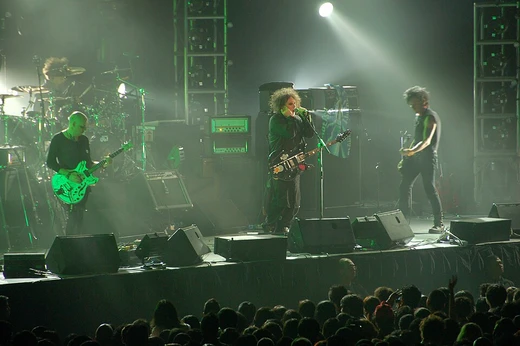
Sonic Characteristics: Guitars are slathered in fuzz and feedback, often clashing with jangly arpeggios that sound like they're being played through a broken radio. Jason Cooper's drumming is a blunt instrument—less metronomic precision, more raw, lurching momentum. Vocals swing from a whisper that barely escapes the mix to a strained, throat-shredding shout. Keyboards and strings are ghosts in the machine, adding texture rather than melody, like dust motes in a dark room. Visual Aesthetic: Robert Smith's smeared lipstick and disheveled hair remain, but the fashion shifts to darker, more casual grunge staples—flannel shirts, torn jeans, and combat boots. The band's stage presence becomes more intense, with less theatrical makeup and more raw, emotional performance. Smith often performs with his eyes closed, as if trying to block out the world. Lyrical Themes: Heartbreak, alienation, and existential dread dominate, often with a surreal, poetic edge. Songs like 'The 13th' explore obsession and loss with a hypnotic, almost ritualistic repetition, while 'Mint Car' offers a deceptively cheerful veneer over themes of escapism and fleeting joy—a sugar high before the crash. Cultural Impact: This era divided fans—some embraced the heavier sound, others missed the lush pop of earlier albums. It nonetheless cemented The Cure's ability to evolve, influencing later alternative and post-grunge acts. The album's erratic nature became a badge of honor for those who appreciated the band's refusal to stay still, even when stumbling.
Did You Know?
- The album 'Wild Mood Swings' was recorded in multiple studios across England and France, reflecting the band's restless creative process.
- The promotional single 'The 13th' features a distinctive, hypnotic guitar riff that was inspired by Eastern scales, a nod to Robert Smith's interest in world music.
- During this era, Robert Smith experimented with using a capo on his guitar more frequently, altering the tuning and giving songs a unique, shimmering quality.
- The band's lineup for this period included new drummer Jason Cooper, who replaced Boris Williams after the 'Wish' tour, bringing a heavier, more rock-oriented style.
- 'Strange Attraction' was released in 1997, after the Grunge-Adjacent era had concluded.
More in Eras & Musical Styles
Elsewhere in the The Cure universe
Spotted an error? Know more?
This is a living reference — every entry is fact-audited, and reader corrections feed straight into our audit queue. Suggest an edit · See this site's audit record