Late Era Gothic Pop (2016-2020)
Dark pop blooms anew in the twilight of a legend.

This period saw Robert Smith and company return to a more guitar-driven, melancholic yet melodic style, reminiscent of their classic 1980s work while incorporating modern production techniques. It served as a bridge between their legacy and contemporary alternative music, reaffirming their status as gothic rock pioneers.
- character
- The Cure (band)
- role
- Musical era of the band
- affiliation
- Universal Music Group
- first_appears
- 2016 (with the release of new material and tours)
Lore & Background
This era was defined by a conscious return to the band's roots, with Robert Smith citing a desire to recapture the raw emotion and sonic textures of albums like 'Disintegration' and 'Pornography.' The 2018 tour, including a historic headlining slot at the British Summer Time festival in Hyde Park, showcased a setlist heavy on deep cuts and fan favorites, signaling a shift away from the more electronic experiments of the early 2000s. The band's lineup stabilized, with Smith, Simon Gallup, Jason Cooper, Roger O'Donnell, and Reeves Gabrels creating a cohesive, powerful live sound that translated into a renewed creative energy.
In Their Own Story
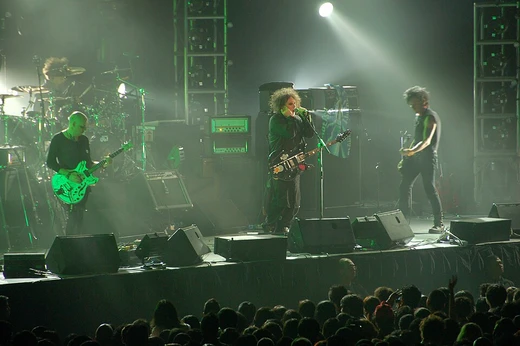
The fog machine hissed, casting a pale veil over the stage. A single blue spotlight found Robert Smith, his hair a wild nest of black, his lipstick smeared just so. He strummed the opening chords of 'Plainsong,' and the crowd, a sea of black lace and pale faces, erupted. It was 2016, and The Cure had returned to their cathedral of sound. For two hours, they wove a tapestry of longing and loss, each song a familiar ghost, yet somehow new. The air smelled of rain and old vinyl, and for a moment, time itself seemed to bend to the will of their melancholy pop.
Reader's Guide
Sonic Characteristics: This era is marked by lush, layered guitar work, with Reeves Gabrels' textured playing complementing Smith's signature jangle. The bass lines are deep and driving, often carrying the melody, while the drums are crisp and atmospheric. Synthesizers provide a wash of sound, but never overpower the guitars. Vocals are emotive, with Smith's distinctive baritone ranging from a whisper to a desperate cry. Visual Aesthetic: The look is a refined version of classic goth: black clothing, heavy eyeliner, and teased hair. Smith's makeup is more deliberate, with smeared lipstick and pale foundation. The stage design often features dramatic lighting, fog, and minimalist backdrops, evoking a sense of gothic grandeur. Lyrical Themes: Love, loss, time, and mortality dominate. The lyrics are introspective and poetic, exploring the pain of nostalgia and the beauty of decay. There is a sense of acceptance, a mature reflection on the darkness that has always been central to the band's identity. Cultural Impact: This era reaffirmed The Cure's influence on a new generation of alternative and gothic acts. Their live performances became legendary, drawing massive crowds and critical acclaim. It solidified their legacy as not just survivors, but as vital artists still capable of creating profound, moving music.
Did You Know?
- The band's 2016 tour included deep cuts and fan favorites but did not feature a full performance of the 'Disintegration' album in order.
- Robert Smith has stated that this era was inspired by a desire to reconnect with the band's 'dark' past after a period of more experimental work.
- The Cure's 2018 European tour featured a setlist that changed nightly, often including songs not played in decades.
- The Cure released a new original song titled 'The Hungry Ghost' in 2019 as part of the 'It Can Never Be the Same' single.
More in Eras & Musical Styles
Elsewhere in the The Cure universe
Spotted an error? Know more?
This is a living reference — every entry is fact-audited, and reader corrections feed straight into our audit queue. Suggest an edit · See this site's audit record