Pop Gothic (1986-1988)
Where darkness dances with pop perfection.

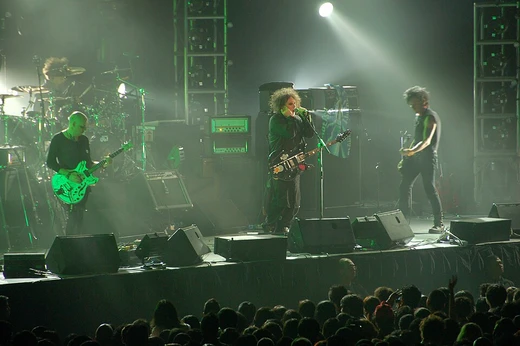
The Pop Gothic era (1986-1988) marks a pivotal transformation in The Cure's sound and image, where the band's brooding post-punk roots blossomed into shimmering, radio-friendly pop without sacrificing their signature melancholy. This period, anchored by the albums *The Head on the Door* (1985) and *Kiss Me, Kiss Me, Kiss Me* (1987), saw Robert Smith swap his black eyeliner for smeared red lipstick and his stark, monochrome stage for a carnival of colors—both musically and visually—while retaining the emotional depth that defined their earlier work. It was a time of mainstream breakthrough, with singles like 'Close to Me' and 'Just Like Heaven' becoming enduring classics, and it solidified The Cure as architects of a unique blend of dark romance and pop sensibility.
- Era
- Pop Gothic (1986-1988)
- Key Albums
- The Head on the Door, Kiss Me, Kiss Me, Kiss Me
- Lead Figure
- Robert Smith (vocals, guitar, primary songwriter)
- Notable Singles
- Close to Me, Just Like Heaven, Why Can't I Be You?
- Aesthetic
- Colorful, messy hair, smeared lipstick, oversized sweaters, and a playful yet dark visual style
- Cultural Impact
- Brought gothic subculture into mainstream pop consciousness
Lore & Background
In the mid-1980s, The Cure emerged from a period of internal turmoil and stylistic experimentation, having shed the stark minimalism of *Pornography* and the folk-tinged *The Top*. With *The Head on the Door*, Robert Smith and the band—now including bassist Simon Gallup, drummer Boris Williams, and returning keyboardist Lol Tolhurst—crafted a sound that was both lush and direct. The album's songs, like 'In Between Days' and 'Push,' balanced jangly guitars with introspective lyrics, creating a template for the Pop Gothic era. This was a band learning to smile through the shadows, embracing pop hooks while never abandoning the emotional weight that made them beloved. Smith later described this shift as 'the sound of falling in love with pop music again, but with a broken heart still ticking in the background.'
In Their Own Story
The rain fell in sheets over the old church hall, but inside, the air was thick with anticipation. A young fan, her hair dyed black and teased into a wild halo, clutched a worn cassette of *Kiss Me, Kiss Me, Kiss Me*. She pressed play, and the opening riff of 'The Kiss' filled the room—a cascade of drums and guitars that felt like a secret shared. She closed her eyes, imagining Robert Smith's voice, that familiar ache wrapped in melody. Outside, the world was gray; here, in the glow of a single lamp, she was part of something bigger—a tribe that found beauty in the bittersweet.
Reader's Guide
Sonic characteristics: The Pop Gothic era is defined by a fusion of jangly, reverb-drenched guitars (often chiming like cathedral bells), driving basslines that pulse with a danceable urgency, and crisp drum machines that lock into hypnotic grooves. Robert Smith's distinctive baritone floats over layered melodies, sometimes doubling his own vocals in harmonies that feel like a conversation with a ghost. Songs often shift between upbeat, danceable rhythms—think the frantic, flamenco-tinged 'The Kiss'—and introspective, slower passages, like the dreamy drift of 'The Snakepit.'
Visual aesthetic: Robert Smith's look became iconic—messy, backcombed black hair that seemed to defy gravity, smeared red lipstick, and pale foundation, often paired with oversized sweaters or frilled shirts that looked borrowed from a Victorian pirate. The band's album covers and music videos embraced surreal, colorful imagery, like the floating bed of 'Close to Me' (a claustrophobic white box that became a symbol of playful absurdity) or the carnivalesque chaos of 'Why Can't I Be You?', where the band dressed as wild animals and clowns, reveling in a kind of gothic vaudeville. Lyrical themes: Love, longing, and existential angst are explored with a newfound playfulness and irony, as in 'Just Like Heaven''s romantic yearning—a sunlit memory of a beach trip with Smith's future wife—or 'Why Can't I Be You?''s frustrated desire, which practically snarls with jealousy. The darkness is still there, but it's tempered by wit and a sense of wonder, as though the band had found a way to dance on the edge of an abyss. Cultural impact: This era catapulted The Cure into the mainstream, influencing a generation of alternative and goth-adjacent bands—from the Smiths to My Bloody Valentine—and proving that melancholy could be pop, and that gothic could be glamorous, even fun.
Did You Know?
- The music video for 'Close to Me' featured the band members crammed into a small, floating white box—a practical joke on the director, who didn't expect the claustrophobic gag to become one of the most iconic visuals of
- Robert Smith has said that 'Just Like Heaven' is one of his favorite Cure songs, and it was inspired by a trip to the beach with his future wife, Mary. The line 'spinning on that dizzy edge' came from the vertigo he felt
- The album *Kiss Me, Kiss Me, Kiss Me* was originally conceived and planned as a double album, and the band recorded enough material for one, but it was ultimately released as a single 18-track album. Smith once joked tha
More in Eras & Musical Styles
Elsewhere in the The Cure universe
Spotted an error? Know more?
This is a living reference — every entry is fact-audited, and reader corrections feed straight into our audit queue. Suggest an edit · See this site's audit record